
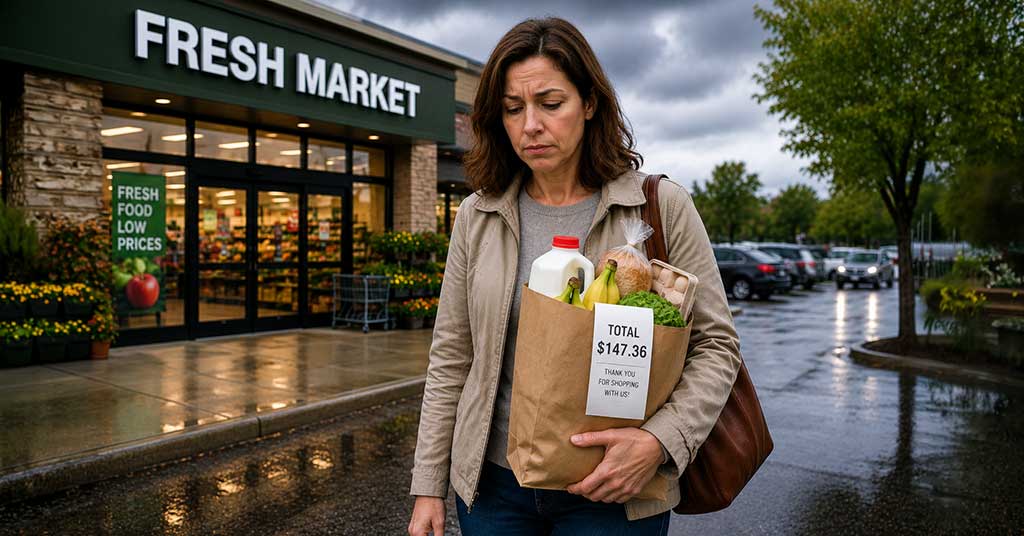
And that is leaving Canadians facing some of the fastest-rising food prices in the G7
The latest inflation numbers from Statistics Canada should make policymakers uncomfortable.
In May, overall inflation reached 3.2 per cent, while food inflation climbed to 3.8 per cent. At first glance, the difference may seem modest. But beneath the headline lies a trend that should concern anyone paying attention to Canada’s economy: food inflation has exceeded overall inflation every single month since Mark Carney became prime minister in March 2025.
Not once during his tenure has food inflation fallen below the national inflation rate.
That streak has now reached 15 consecutive months.
For Canadians, this matters far more than many economists realize. While inflation is often discussed as a broad economic concept, consumers experience inflation through everyday purchases. They may not notice changes in the price of durable goods or financial services, but they certainly notice the cost of filling a grocery cart.
And lately, grocery bills have been sending a message very different from the one conveyed by headline inflation numbers.
The May data also reveal something else. Canada is once again leading the G7 in food inflation. While many advanced economies have managed to bring food price growth closer to their overall inflation rates, Canada remains an outlier.
That should prompt an important question: why?
For years, governments could point to global disruptions. The pandemic, the war in Ukraine, shipping bottlenecks, energy costs and climate-related events all contributed to higher food prices. Those explanations were legitimate.
Today, they are becoming less convincing.
Every G7 country has faced the same global challenges. Yet Canada has returned to the top of the food inflation rankings. When a country consistently performs worse than its peers, domestic factors inevitably become part of the conversation.
The composition of May’s inflation numbers is particularly revealing.
Coffee prices rose 14.7 per cent over the last year. Beef prices increased 13.3 per cent. Fresh vegetables were up 9.0 per cent, while fresh fruit rose 5.3 per cent.
These are not niche products. They are staples purchased by millions of households every week.
Coffee is increasingly becoming a luxury item. Beef remains under pressure from North American herd reductions. Produce prices continue to reflect Canada’s dependence on imports, transportation costs, labour shortages and currency fluctuations. None of these pressures appear likely to disappear anytime soon.
More importantly, the persistence of food inflation suggests that Canada is dealing with something deeper than temporary market disruptions.
Food inflation has now exceeded overall inflation for 15 straight months. That is not a statistical anomaly. It is a pattern.
The implications are significant.
Food inflation functions as a regressive tax. Lower-income households spend a larger share of their income on food than wealthier Canadians. When grocery prices rise faster than overall inflation, those with the least financial flexibility suffer the most. Families adapt by purchasing fewer fresh products, trading down to cheaper alternatives or simply absorbing the higher costs through debt.
Over time, these adjustments affect not only household finances but also nutrition, health outcomes and consumer confidence.
The political implications are equally important.
Food affordability is increasingly becoming the economic issue Canadians care about most. Consumers may be told that inflation is moderating, but their lived experience at the grocery store often tells a different story. When food prices continue to outpace overall inflation month after month, public confidence in economic management inevitably erodes.
The challenge facing Ottawa is therefore much larger than managing inflation expectations. It is about addressing the structural issues that continue to make food more expensive in Canada than it should be.
Interprovincial trade barriers remain largely intact. Regulatory burdens continue to add costs throughout the supply chain. Infrastructure bottlenecks reduce efficiency. A weak Canadian dollar makes imported food more expensive. Meanwhile, governments rarely evaluate policy decisions through the lens of food affordability.
Governments cannot control global commodity markets or weather-related disruptions. They can, however, address many of the domestic factors that continue to drive food costs higher. Reducing interprovincial trade barriers, improving supply chain efficiency and reviewing regulations that add unnecessary costs throughout the food system would be a reasonable place to start.
The result is a food system that appears increasingly vulnerable to shocks and less competitive than those of many peer nations.
The May numbers should therefore be viewed as more than another monthly inflation report.
They are a reminder that Canada’s affordability crisis has not disappeared. It has simply become concentrated where Canadians notice it most: at the grocery store.
Until food inflation begins moving below overall inflation, many households will continue to feel poorer regardless of what the headline economic indicators suggest.
And after 15 consecutive months of food inflation exceeding general inflation, Canadians have every reason to be concerned.
Dr. Sylvain Charlebois is senior director of the Agri-Food Analytics Lab at Dalhousie University, co-host of The Food Professor Podcast and visiting scholar at McGill University.
Explore more on Food prices, Food insecurity, Cost of Living, Canadian economy
The views, opinions, and positions expressed by our columnists and contributors are solely their own and do not necessarily reflect those of our publication.
Troy Media empowers Canadian community news outlets by providing independent, insightful analysis and commentary. Our mission is to support local media in helping Canadians stay informed and engaged by delivering reliable content that strengthens community connections and deepens understanding across the country.

