
From Nazi Germany to revolutionary Iran, history shows how often admiration for “liberation” ends in repression and violence
Key points
- Western intellectuals have repeatedly celebrated revolutions as liberating, only to be proven wrong when those movements turn authoritarian.
- These errors are not harmless misreads; they help legitimize new regimes before their violence and repression are fully exposed.
- The Iranian Revolution shows how Western praise masked the rapid loss of basic freedoms, especially for women.
- Intellectual confidence often shields its advocates from consequences, while ordinary people live with the results.
- This pattern still matters today, because the same language of moral certainty is used to justify radical political change.
What’s this?

Western intellectuals have a long record of cheering revolutions that often end in repression. Again and again, brilliant minds convince themselves they are witnessing liberation, only to help lend legitimacy to tyranny.
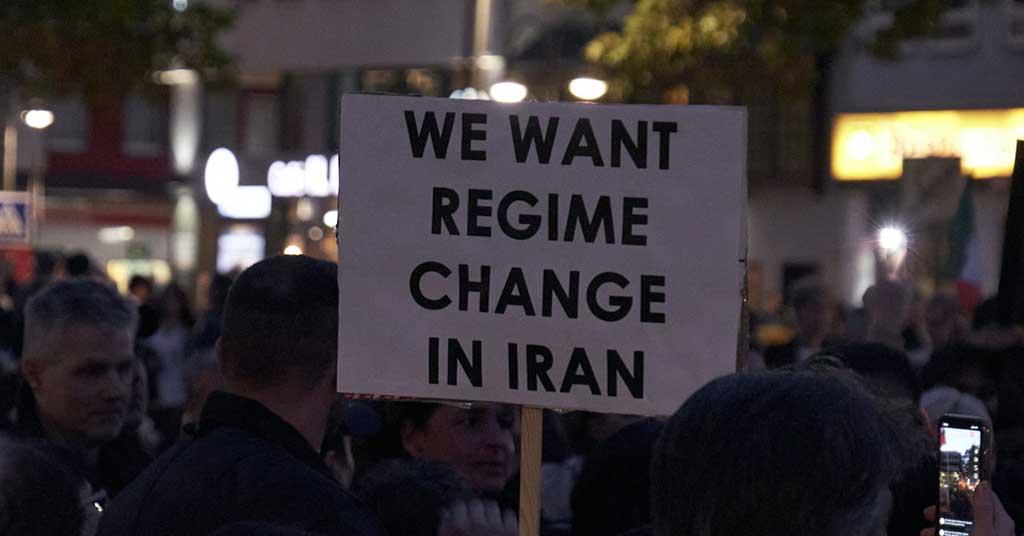
With the current uprising in Iran underway, it is worth revisiting how the revolution that created the Islamic Republic was once welcomed by academics and media in the West, and why that enthusiasm should still embarrass us.
The chattering class has never been especially good at choosing revolutionary dance partners. During the Soviet Union’s long and grim tenure, many Western intellectuals actively promoted the workers’ utopia, even as evidence of mass repression accumulated. Among them were respected figures such as Sidney and Beatrice Webb. History has not been kind to their judgment.
In 1979, the Shah of Iran, a Western-aligned monarch who ruled as an autocrat but pursued secular modernization, was overthrown in a popular revolution that brought Ayatollah Ruhollah Khomeini and a clerical Islamist regime to power. Many Western observers interpreted the uprising not as a warning, but as a hopeful rejection of both American-backed capitalism and Soviet-style communism.
This pattern of intellectual misjudgment did not begin with Iran, however.
Two of the most revealing examples are Martin Heidegger and Michel Foucault. Both were towering intellectual figures of the 20th century. Both were deeply hostile to liberal democracy. And both, at decisive moments, aligned themselves with revolutionary movements that later slid into barbarism.
Heidegger is often regarded as the most original philosopher of his century, rivalled only by Ludwig Wittgenstein in the English-speaking world. Yet in 1933, when he was appointed rector of the University of Freiburg, Heidegger was also a member of the Nazi Party. This was not merely an accident or a momentary lapse.
Philosophically, Heidegger rejected modern rationalism and scientism in favour of rootedness, particularity and national destiny. Upon assuming the rectorship, he called for the “self-assertion of the German university” as a spiritual enterprise. He argued that only Germany possessed the spiritual resources to challenge the decadent, technology-obsessed empires of the United States and the Soviet Union, tracing that claim back to the origins of philosophy among the pre-Socratic Greeks.
Heidegger’s tenure as rector was brief. He soon fell out with the Nazi regime in Berlin. When news of his rapid departure spread, one colleague dryly asked, “Back from Syracuse?”, a reference to Plato’s failed attempt to advise the tyrant of Syracuse. The joke carried a warning that intellectuals would be wise to remember.
After leaving Freiburg, Heidegger said little about his involvement with Nazism. His most sustained criticism of the regime was that it succumbed to the same technological obsessions as its American and Soviet rivals. In later years, his thoughts turned toward a broader critique of modernity and an interest in Eastern spiritual traditions.
Decades later, Michel Foucault followed a similar path.
In 1978, as Iran moved toward revolution, Foucault travelled there as an enthusiastic observer. Like Heidegger, he was skeptical of liberal democracy and influenced by Friedrich Nietzsche. He allowed his intellectual commitments to cloud his moral judgment.
Foucault is revered by contemporary postmodern thinkers as a foundational figure in the critique of Western liberalism. He is often described as the father of deconstruction and remains among the most cited authors in academia. Shortly before his death, Foucault acknowledged the deep influence Heidegger had on his thinking.
Politically, however, Foucault’s pilgrimage to revolutionary Iran should have raised alarms. He publicly praised aspects of the uprising that would soon usher in the Islamic Republic. Known for his analysis of power relations, especially the state’s power over individuals, Foucault saw in the revolution a form of resistance that escaped Western political categories. He rejected the orthodox Marxist view of power as something imposed solely from above, instead portraying oppression as a symbiotic relationship sustained by both ruler and ruled.
What Foucault did not offer was a convincing theory of liberation. Yet in Iran, he believed he glimpsed something transformative.
What followed the revolution was not liberation but the consolidation of power. Political opponents were executed in large numbers, dissent was suppressed, religious law was imposed, and women were subjected to mandatory veiling and legal restrictions that sharply curtailed their freedoms.
Foucault romanticized what he saw in the Iranian streets, interpreting the predominantly male mass movement through the lens of sexual and cultural transgression. Iranian feminists were far less impressed. Many understood immediately what Western intellectuals preferred to ignore, that the revolution would erase, not empower, women.
Under the Shah, the hijab had been publicly banned. While the Shah had many critics, that ban reflected an understanding shared by many Iranian women that the hijab symbolized submission, not choice. Today, despite protests from Western feminists and Islamists alike, many Iranian women continue to view compulsory veiling as a marker of spiritual, intellectual and bodily erasure. It is not, for them, a neutral garment. It is the antithesis of freedom.
That many contemporary feminists still cite Foucault as an intellectual authority speaks to how quickly historical reality is sacrificed to ideological loyalty.
There has been endless debate over whether Heidegger’s and Foucault’s political failures were separable from their philosophical work. The connection is probably stronger in Foucault’s case than Heidegger’s. But the broader pattern is unmistakable.
Revolutions that promise total renewal almost always end up controlling every part of life. Unlike the English Glorious Revolution or the American Revolutionary War, which pursued limited and clearly defined political goals, later revolutions sought to sweep away social and moral constraints altogether. They demand complete transformation. They rarely deliver anything but repression.
Yet from universities to political salons, revolutionary fervour remains fashionable. Its excesses are indulged. Its failures are forgotten. And its victims are quietly ignored.
That should give today’s leaders pause when they speak casually about building a “new world order.” History suggests that intellectual enthusiasm is often at its most dangerous when it is most confident.
Collin May is a senior fellow with the Frontier Centre for Public Policy, a lawyer, and adjunct lecturer in Community Health Sciences at the University of Calgary.
Explore more on Authoritarianism, Human Rights, Islamofascism, Communism
The views, opinions, and positions expressed by our columnists and contributors are solely their own and do not necessarily reflect those of our publication.
Troy Media empowers Canadian community news outlets by providing independent, insightful analysis and commentary. Our mission is to support local media in helping Canadians stay informed and engaged by delivering reliable content that strengthens community connections and deepens understanding across the country.

