
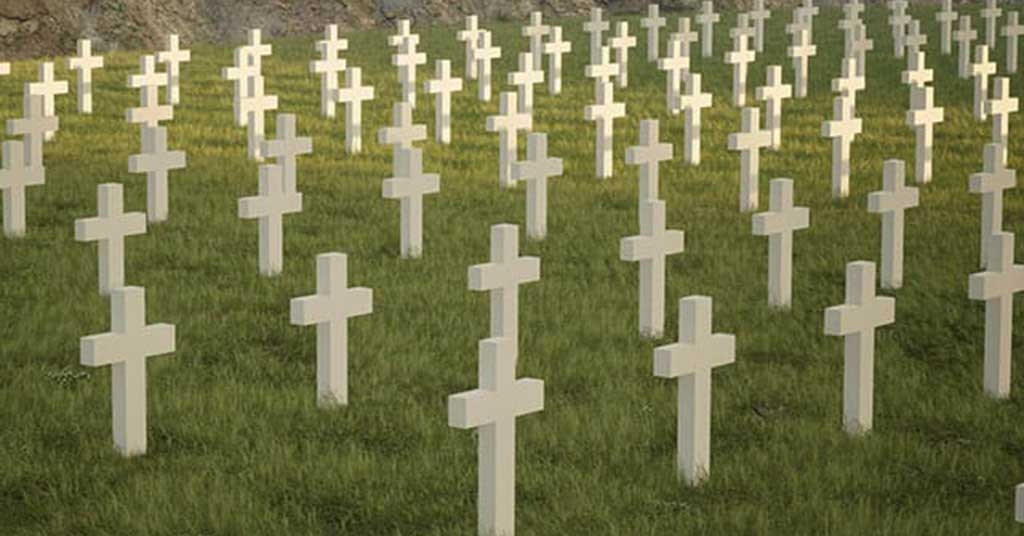
Remembrance Day once honoured soldiers for their courage and conviction, but the values they fought for have long since been rejected

With the untimely death of Tim Cook on Oct. 25, Canada lost a valued historian. Military history was Cook’s oeuvre, and the First World War was a particular specialty. His ability to marry academic rigour with accessible storytelling made him a relatively rare bird.
Naturally, Cook wrote about battles, military commanders and political leaders. But he was also fascinated with ordinary soldiers, scouring the archives for personal letters from the front and other material to develop an understanding of what motivated the soldiers and how they managed the day-to-day horrors of prolonged trench warfare in an environment characterized by cold, mud, lice and rats, not to mention the ever-present spectre of violent death.
Camaraderie was critical. To quote from an interview with Cook: “one of the ways they cope is to create their own tribe, their own group that is insulated from everyone else.”
All of which brings us to Remembrance Day.
Although formally recognized as “remembrance for the men and women who have served, and continue to serve our country during times of war, conflict and peace,” both the origins and iconography of Remembrance Day relate to the First World War. There’s the two-minute silence at the 11th hour of the 11th day of the 11th month to observe the formal end of hostilities in 1918; the playing of the Last Post; and, of course, the ubiquitous red poppies.
The conflict wasn’t post-Confederation Canada’s first military endeavour, but its scale dwarfed anything that came before it, and only the subsequent Second World War was a comparable event. Some 620,000 Canadians served between 1914 and 1918 and approximately 60,000 were killed. To get a sense of scale, adjust the fatalities for population growth and it would be comfortably north of 300,000 today.
In War: How Conflict Shaped Us, Margaret MacMillan notes the long history of cultures elevating personal characteristics associated with battlefield success, honouring bravery, endurance, toughness and the willingness to face death. It’s been pretty much a universal characteristic.
Nor should we think of war as only a male activity driven by patriarchal social structures. While it’s true that military hierarchies are traditionally male and the fighting in most wars has been done largely by men, women have always played a key role in reinforcing the culture.
We, though, have become somewhat uncomfortable with the warrior ethos. Take, for instance, In Flanders Fields. Written in 1915 by Guelph’s John McCrae, the poem has acquired iconic status over the decades. It’s haunting and melancholy, sufficiently so to grab at your throat and send shivers down your spine. It’s also become inextricably intertwined with Remembrance Day.
There is, however, a small problem. While we now view the First World War as senseless carnage, In Flanders Fields has a very different perspective. As the third and final stanza makes unequivocally clear, the poem’s message isn’t about the war’s futility—it’s about the need to keep the faith and carry on to victory.
Much the same can be said about the music associated with the era. Those songs written in recent decades stress the sadness and futility of it all, but the actual popular music of the time was cheerful, patriotic and resolute.
Rather than seeing the soldiers as they were, we insist on recasting them as victims. Stripping them of personal agency, we ignore the fact that 80 per cent of them were volunteers, people who, for various reasons, chose to go to war.
So what motivated them?
Many were surely lured by the male affinity for adventure, compounded by patriotic fervour and enthusiastic loyalty to the concept of king and empire, however incomprehensible or disreputable the latter may now seem to us. There was also the buzz of an environment where the usual social norms regarding life, death and destruction had either vanished or become significantly attenuated. In her book, MacMillan documents how some found the whole experience “vastly exciting.”
Acknowledging this shouldn’t be confused with cheerleading. As I’ve previously written on more than one occasion, I think Britain’s reluctant decision to enter the First World War was a tragic error on many fronts. And if Britain had stood aside, Canada wouldn’t have been involved.
But respectfully remembering those who died shouldn’t be confused with turning them into something they were not. They weren’t hapless victims—they were people with beliefs and values of their own, even if we no longer look at the world in the same way they did.
Troy Media columnist Pat Murphy casts a history buff’s eye at the goings-on in our world. Never cynical – well, perhaps a little bit.
Explore more on Remembrance Day, First World War, Military, War/Conflict, Canadian history, Patriotism
The views, opinions, and positions expressed by our columnists and contributors are solely their own and do not necessarily reflect those of our publication.
Troy Media empowers Canadian community news outlets by providing independent, insightful analysis and commentary. Our mission is to support local media in helping Canadians stay informed and engaged by delivering reliable content that strengthens community connections and deepens understanding across the country.

