
If Venezuela were to restore production, U.S. refiners would have new options that could erode Canada’s long-standing position in the heavy-crude market

The United States’ confrontation with Venezuela could lead to a reduction in the U.S. long-term need for Canadian crude, a shift that would have major consequences for Canada.
About 97 per cent of Canada’s crude exports go to the U.S., according to the Canada Energy Regulator. When Venezuelan supplies are disrupted, prices for heavy oil rise, and Canada benefits in the short term. But if the standoff brings political change and Venezuela rebuilds its oil sector, the U.S. could begin relying less on Canadian barrels.
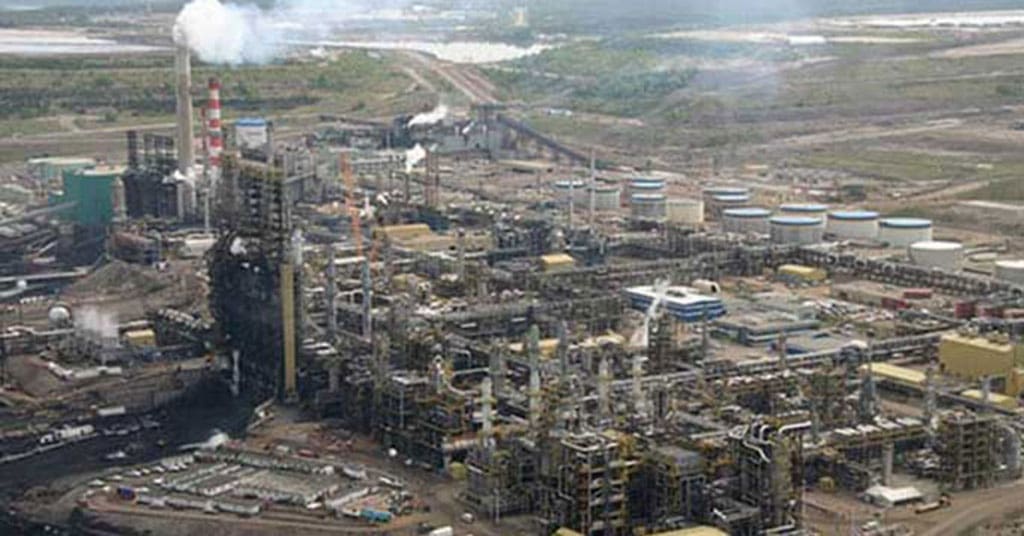
Canada is one of the world’s major producers of heavy crude, mostly from Alberta’s oil sands. U.S. Gulf Coast refineries were designed to run on heavy oil because it was cheap and plentiful for decades. That is why what happens in the Caribbean matters to Canada.
Venezuela holds almost a fifth of the world’s known oil reserves yet produces less than one per cent of global supply. Most of its crude is heavy and sour, the same type many U.S. refineries are configured to process and similar to what Canada exports. While its oil industry has collapsed, the reserves remain and could re-enter the market under a different government. That puts Canadian and Venezuelan barrels in direct competition.
Those market stakes have grown sharper as geopolitical tensions escalate. Tensions rose sharply when the USS Gerald Ford aircraft carrier strike group arrived in mid-November, marking the largest U.S. military deployment in Latin America since 1989. U.S. President Donald Trump added the Ford to eight warships, a nuclear submarine and F-35 aircraft already in the region, and has warned of possible strikes on Venezuelan territory.
Why Washington is acting now is a matter of debate. Venezuelan President Nicolás Maduro, whose reelection last year is widely considered illegitimate, accuses the U.S. of trying to seize his country’s oilfields. Washington denies it. Colombia’s President Gustavo Petro argues the pressure is meant to force Venezuela to negotiate over control of its oil assets.
Whatever the motive, the collapse of Venezuela’s oil industry makes it unlikely that any U.S. action would change production in the short run. Years of corruption and mismanagement have gutted Venezuela’s output. Even so, the scale of its reserves gives the country the potential for a long-term recovery if political conditions stabilize. Major oil companies operated there for decades before nationalization, and many could return if investment risks eased.
If a pro-Western government took power, production could eventually rise from under one million barrels a day to four or even five million. But it would take at least a decade and billions in investment. With that kind of recovery, U.S. refiners would have new supply options, and Canada’s position as the U.S. main heavy-oil supplier could weaken.
But in the near term, losing Venezuela’s heavy-crude production, even briefly, would tighten the market and lift prices for similar grades, including Canadian heavy oil. Countries such as China and India rely heavily on this type of crude, which could increase demand for Canadian barrels during any disruption.
The long-term risk remains the larger concern. As the Toronto Star’s Andrew Phillips writes, “Trump has boasted in the past that the U.S. doesn’t need anything from Canada, including its oil. That’s flat-out false right now. But it could be true down the road if that American armada parked off the coast of Venezuela does go into action.” A revived Venezuelan sector could give the U.S. heavy oil comparable to Canada’s, backed by far larger reserves.
Oil and gas remain Canada’s largest export sector and a major source of revenue and jobs. Any shift in American sourcing would carry significant economic consequences. The standoff in the Caribbean shows how exposed Canada is to a single customer. If the U.S. gains access to millions of barrels of new Venezuelan supply in the years ahead, Canadian producers could face a shrinking market.
Canada needs to find new buyers. Relying on one customer leaves the country vulnerable to geopolitical shocks it cannot control.
Toronto-based Rashid Husain Syed is a highly regarded analyst specializing in energy and politics, particularly in the Middle East. In addition to his contributions to local and international newspapers, Rashid frequently lends his expertise as a speaker at global conferences. Organizations such as the Department of Energy in Washington and the International Energy Agency in Paris have sought his insights on global energy matters.
Explore more on Canada-US relations, Energy sector, Trade, U.S. politics
The views, opinions, and positions expressed by our columnists and contributors are solely their own and do not necessarily reflect those of our publication.
Troy Media empowers Canadian community news outlets by providing independent, insightful analysis and commentary. Our mission is to support local media in helping Canadians stay informed and engaged by delivering reliable content that strengthens community connections and deepens understanding across the country.

